
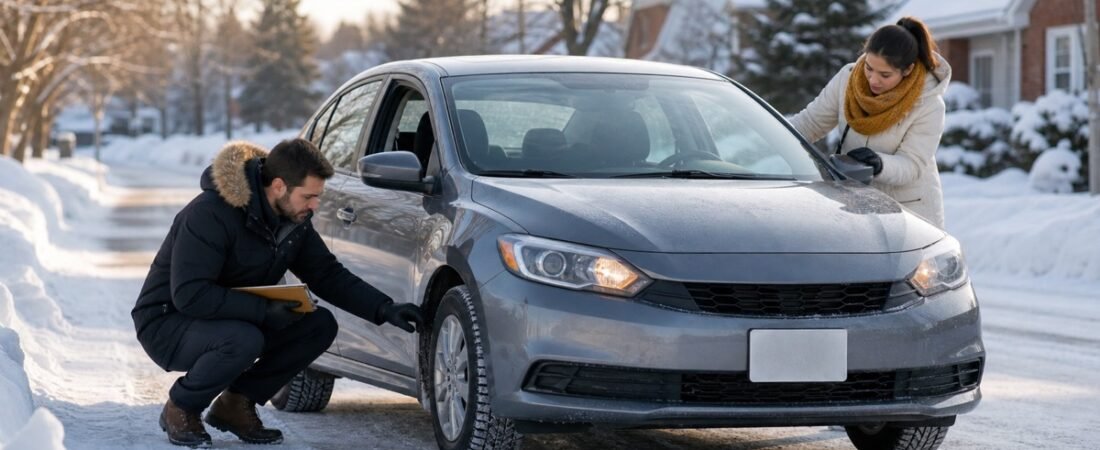
Winter driving practice tips for new Ontario drivers before snow, ice and low visibility make roads harder.
Why Winter Changes Everything
The MTO Driver’s Handbook advises drivers to check weather forecasts and road reports, prepare a winter survival kit and understand that winter road surfaces can hide slippery areas. New drivers should not wait for a storm to learn these habits.
Snow and ice reduce grip, but low visibility, frozen windows and rushed decisions create just as many problems.
Winter Habits To Practice
- Clear all windows, mirrors, lights and the roof before driving.
- Increase following distance because stopping takes longer.
- Brake, steer and accelerate gently to avoid skids.
- Slow before turns instead of braking hard during the turn.
- Practice in daylight and light traffic before trying difficult conditions.
- Keep warm clothing, a flashlight, blanket, shovel and small emergency supplies in the car.
Book A Lesson Before The First Storm
A winter confidence lesson can cover braking distance, traction, lane position, visibility and calm decision-making. It is much easier to learn these habits before the first heavy snow.
If conditions are unsafe, the safest choice is to delay the trip. Good drivers know when not to drive.
Quick Readiness Check
You are getting close when you can perform the skill without reminders, stay calm after a small mistake, explain the rule in your own words, and make the safe choice even when another driver is impatient. If you still need repeated reminders, that is not failure; it simply means you need more targeted practice before test day.
Need help getting road-test ready?
SparkOn Driving Academy helps students in Scarborough and nearby GTA areas prepare with patient lessons, mock tests and road-test car support.