
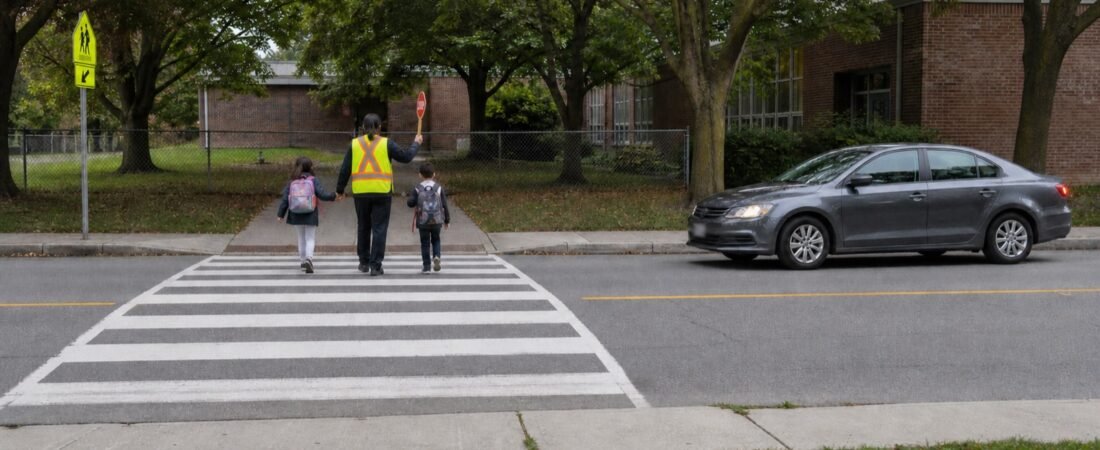
A safety guide for new drivers around Ontario school zones, crossing guards, pedestrian crossovers and busy neighbourhood streets.
Why These Areas Need Extra Attention
School areas are busy because many road users are making small decisions at the same time. Parents are parking, buses are stopping, children may be walking between cars and cyclists may appear from paths, sidewalks or side streets.
For new drivers, the challenge is not only seeing the sign. The real skill is changing your speed and attention before the risk appears.
Pedestrian Crossovers Are Not Ordinary Intersections
A pedestrian crossover is designed to give pedestrians a protected place to cross. Drivers need to be ready to stop and should avoid passing nearby vehicles that may be stopping for someone crossing.
At school crossings with a crossing guard, treat the guard’s direction as part of your driving plan. Wait until the crossing is fully clear before moving again.
What To Scan For
- Children standing near the curb, not only children already crossing.
- Crossing guards, flashing lights, pavement markings and school-zone signs.
- Parked vehicles that can hide pedestrians until the last second.
- Drivers ahead who may stop suddenly for a crossing.
- Cyclists and scooters moving faster than expected near the sidewalk edge.
Road-Test Habits That Carry Into Daily Driving
A road-test examiner wants to see early recognition, smooth speed control and the ability to yield without panic. In daily driving, those same habits protect people who are smaller, slower and harder to predict than cars.
If another driver behind you is impatient, stay calm. Your job is not to match their pressure. Your job is to make the safe, legal decision in front of you.
Quick Readiness Check
You are getting close when you notice school-zone signs early, slow without being reminded, protect crosswalk space and wait calmly until pedestrians, children or crossing guards are fully clear of your path.
Need help getting road-test ready?
SparkOn Driving Academy helps students in Scarborough and nearby GTA areas prepare with patient lessons, mock tests and road-test car support.