
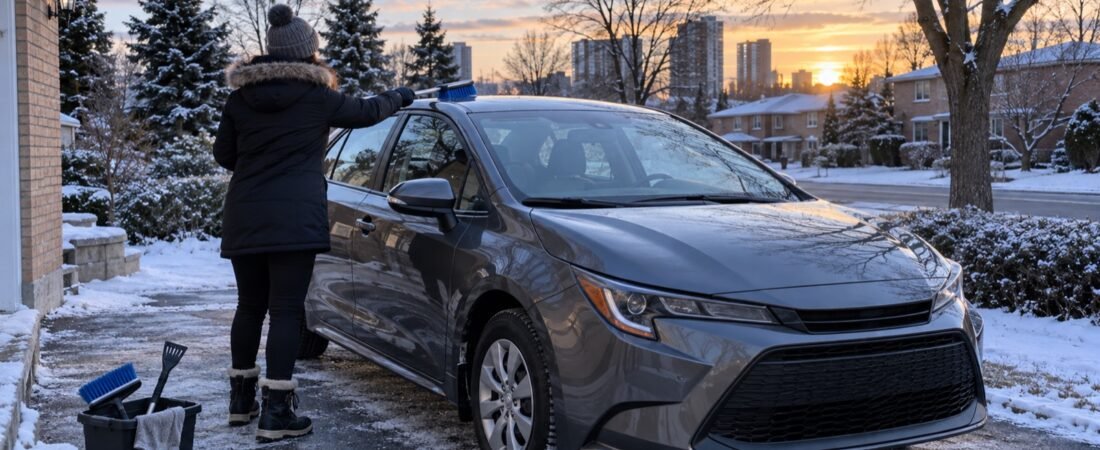
The first cold mornings in Scarborough can catch a new driver off guard. You brush a small patch on the windshield, turn the defroster on low and hope the rest clears while you drive. That shortcut creates blind areas exactly where a pedestrian, cyclist or merging car can appear.
Before you move, make the whole vehicle visible from the driver’s seat. This is a small habit, but it changes the quality of every decision that follows. Here is the practical routine I recommend to Ontario learners for frost, snow and interior fog, along with the official rules behind it.
What Ontario requires: a clear view
Ontario’s Highway Traffic Act section 74 requires the windshield and the windows beside the steering compartment to be in a condition that affords a clear view to the front and sides. The rear window must also provide a clear view, unless properly positioned mirrors provide that view. In plain language, a small cleared “porthole” is not a safe substitute for seeing the road around your vehicle.
The law is the baseline. My instructor recommendation is more practical: if you cannot clearly identify the edges of your lane, nearby vehicles and the space you may need to stop, wait before entering traffic. Visibility is part of vehicle control, not a cosmetic detail.
Clear the outside before starting the engine
Use a proper snow brush and ice scraper, and clear every window, both side mirrors, the roof, hood, trunk and all lights. The City of Toronto’s winter safety tips specifically tell drivers to remove snow and ice from these surfaces before driving. Snow left on the roof can slide forward when you brake or blow onto a following driver; snow left on a lamp can hide your signal or brake light.
Start with the roof and upper surfaces, then brush down the glass and lights. Do not use a metal tool or hot water on frozen glass. If the scraper is not reaching the bottom edge of the windshield, take another pass rather than assuming the wipers will finish the job. Lift frozen wipers only when it is safe and follow the vehicle owner’s instructions.
Use the defroster to clear interior fog
Interior fog is different from outside frost. Turn on the front defroster, direct airflow to the windshield, and use the temperature and fan settings that clear the glass. Many vehicles clear fog faster with air conditioning selected, even in cold weather, because it removes moisture from the air. Use the owner’s manual if you are unsure which control is the defrost setting.
Keep the windshield and the inside of the glass clean. A thin film can turn oncoming headlights into a bright haze at night. Worn wiper blades also leave streaks that make low winter sun and spray harder to manage. The MTO handbook advises drivers to keep windows and mirrors clean and use the defroster and wipers to maximize vision.
Do a seated visibility check
Once the glass is clear, sit in your normal driving position and check what you can actually see. Confirm that the interior mirror frames the rear window, both side mirrors show the next lane without showing mostly the side of your car, and the shoulder areas are not blocked by frost or a coat hanging in the back.
Then look over the hood. Can you see the lane markings near the front corners? Can you identify a person walking between parked cars? If not, keep clearing or adjust the vehicle before moving. The MTO’s getting-ready guidance also reminds drivers to know the controls for the wipers, washers, heater and defroster before they need them on the road.
Do not drive with a small cleared patch
This is one of the most common learner shortcuts: scrape a circle in front of the driver, leave the side windows white and start rolling. The problem is not only what you cannot see ahead. You may miss a cyclist beside the passenger door, a child near a driveway, or a vehicle approaching from an angle at a Scarborough intersection.
If the glass is still blocked, park safely and wait. Do not lean forward over the steering wheel to look through one small opening. That posture changes your control and still leaves most hazards hidden.
Check snow and ice around the vehicle
Before leaving a curb or driveway, look for a ridge of packed snow around the tires and for ice covering the door handles or fuel door. Clear the headlights, tail lights, turn signals and licence plate. Check that the exhaust outlet is not blocked by snow if the vehicle has been sitting in a drift. Do not reach under a running vehicle; clear around it from a safe position and follow the owner’s manual.
In a Scarborough condo garage, melting snow can refreeze near the ramp or exit. In a plaza, a bank of plowed snow can hide the corner of a vehicle or pedestrian. These are reasons to move slowly and scan, not reasons to squeeze into traffic because another driver is waiting.
Official winter guidance once you are moving
The MTO’s night and bad-weather guidance says to slow down when visibility is reduced, keep windows and mirrors clean, use the defroster and wipers, and leave more space when conditions require it. The same page advises gradual speed changes and extra caution on snow, ice and blowing snow.
Those are official safety recommendations. My practical rule is simple: drive only as fast as your clear view allows. If spray, fog or blowing snow suddenly reduces what you can see, ease off smoothly, avoid a sudden lane change and look for a safe place to pull completely off the road if continuing is not reasonable.
A five-minute Scarborough pre-drive routine
- Walk around the vehicle and brush snow from the roof, hood, trunk, windows, mirrors and lights.
- Scrape the windshield and side glass completely; never rely on the wipers to remove ice.
- Start the defroster and wait until interior fog is gone from the full viewing area.
- From the driver’s seat, check mirrors, blind areas, lane edges and the rear window.
- Before entering traffic, look around the snowbank or parked cars for people and vehicles.
Practise this routine on a quiet morning before a busy lesson. It becomes automatic without becoming rushed, and it gives you a chance to discover a weak scraper, empty washer fluid or slow defroster while you are still parked.
Prepare for lessons and road-test days
For a lesson or a road test, arrive early enough to clear the vehicle fully. Do not treat a test appointment as a reason to drive with blocked windows. DriveTest expects a safe, properly functioning vehicle, and visibility is part of being ready to drive. If a warning light, damaged wiper or failing defroster affects your view, arrange repairs before the appointment rather than hoping it will not matter.
Combine this check with SparkOn’s seat-and-mirror setup routine and the guide to night driving in Scarborough. If winter mornings still feel rushed, book a Scarborough lesson with SparkOn Driving Academy. We can practise the pre-drive check, visibility decisions and first few neighbourhood blocks at a pace that keeps you in control. For scheduling, contact SparkOn.
Quick visibility checklist
- Windshield and side windows fully clear?
- Rear window or mirror view unobstructed?
- Mirrors, lights and licence plate free of snow and ice?
- Roof and hood cleared so snow cannot slide or blow loose?
- Defroster, wipers and washer fluid ready?
- Can I see enough to stop safely before entering traffic?
Clear glass gives you information. Good driving is what you do with that information: scan, slow down when needed and leave yourself a safe option. That is the habit I want every Scarborough learner to carry into the first frost and the rest of the winter.