
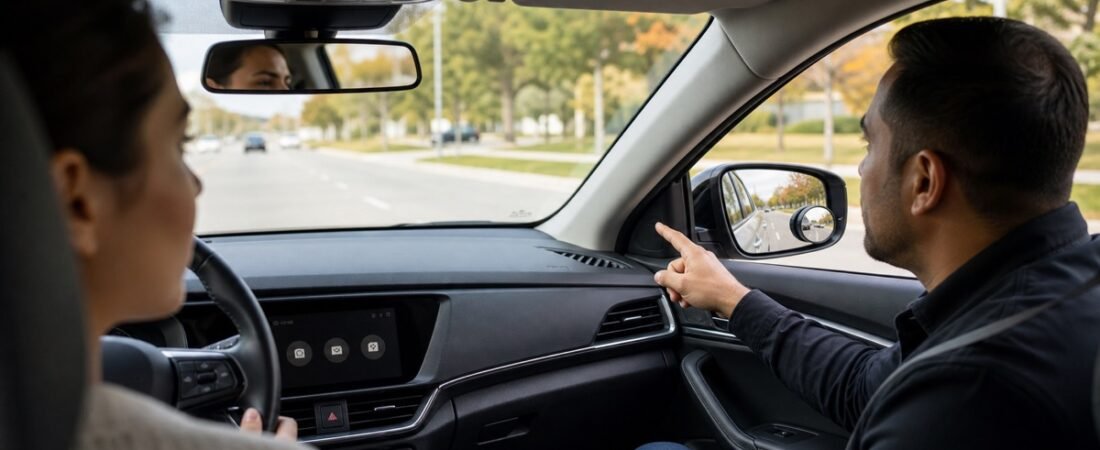
A modern driving lesson guide explaining how blind-spot monitors, cameras and sensors support safe driving without replacing driver responsibility.
Technology Is A Support, Not A Substitute
Many newer vehicles have blind-spot lights, backup cameras, lane alerts and parking sensors. These tools can reduce risk, but they can also make new drivers lazy if they stop checking properly.
On a road test and in real life, you still need to show active observation. A shoulder check confirms the space beside the vehicle that mirrors and sensors may not fully cover.
Use A Simple Lane Change Routine
- Check the interior mirror to understand traffic behind you.
- Check the side mirror for vehicles in the target lane.
- Signal early and keep your speed steady.
- Shoulder check the blind spot before moving.
- Move smoothly into the lane and cancel the signal.
- Use driver-assist warnings as extra information, not permission to move.
Practice With And Without The Features
If your family car has many safety features, practice the correct manual checks anyway. You may take lessons or a road test in a different vehicle, and technology can be blocked by weather, dirt or sensor limits.
The best drivers use technology as a backup while keeping strong fundamentals.
Quick Readiness Check
You are getting close when you can perform the skill without reminders, stay calm after a small mistake, explain the rule in your own words, and make the safe choice even when another driver is impatient. If you still need repeated reminders, that is not failure; it simply means you need more targeted practice before test day.
Need help getting road-test ready?
SparkOn Driving Academy helps students in Scarborough and nearby GTA areas prepare with patient lessons, mock tests and road-test car support.