
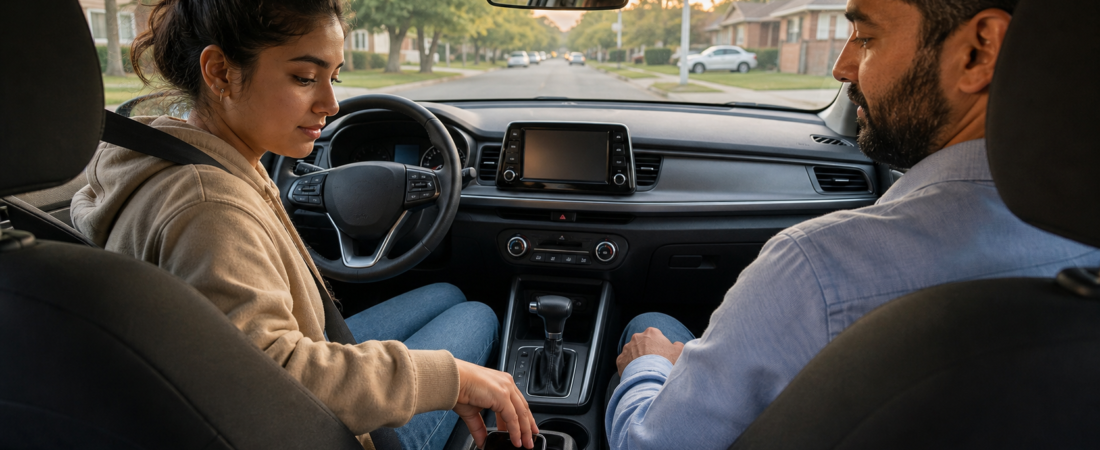
A practical guide to Ontario's distracted-driving rules, including what G1 and G2 drivers can do with a phone, what is illegal at red lights and how novice penalties work.
What Ontario Counts As Distracted Driving
Ontario's distracted-driving law covers hand-held communication and entertainment devices. While driving, you cannot hold a phone to talk, text or dial, use a hand-held tablet, watch an unrelated screen, or program a phone-based GPS by hand.
A secure mounted device and hands-free features have limited permitted uses, but legal does not always mean wise. If they pull your attention away enough to endanger someone, careless-driving or dangerous-driving consequences may still apply.
A Red Light Is Not Phone Time
The rule continues while you are stopped in traffic or waiting at a red light. Holding the phone for a quick message, map change or playlist choice is not allowed simply because the wheels have stopped. Program navigation and choose audio before leaving.
If something truly needs your attention, pull over where stopping is legal and safe, then park before handling the device. Ontario allows an emergency call to 911, but advises pulling off the road to a safe area first when possible.
Why G1 And G2 Consequences Are Different
G1 and G2 holders are novice drivers. Ontario says they face the same distracted-driving fines as fully licensed drivers, but they do not receive demerit points for this offence. Instead, the graduated-licensing consequences are longer suspensions.
The official Ontario page lists a 30-day suspension for a first conviction and 90 days for a second. A third conviction cancels the licence and removes the driver from the graduated licensing system, which means starting that process again. Fines, fees and rules can change, so check the official page for current details.
Build A Phone-Free Driving Routine
Scarborough traffic can change quickly around intersections, buses, pedestrians and cyclists. Make phone setup part of the parked-car routine, alongside adjusting the seat and mirrors. Remove temptation before the car moves.
- Enter the destination and review the first few directions before shifting into drive.
- Turn on driving mode, silence notifications and place the phone out of reach.
- Ask a passenger to handle an urgent call or message.
- If plans change, find a legal, safe place to park before touching the phone.
Quick Readiness Check
You are getting close when you can perform the skill without reminders, stay calm after a small mistake, explain the rule in your own words, and make the safe choice even when another driver is impatient. If you still need repeated reminders, that is not failure; it simply means you need more targeted practice before test day.
Need help getting road-test ready?
SparkOn Driving Academy helps students in Scarborough, Markham, North York and nearby GTA areas prepare with patient lessons, mock tests and road-test car support.