
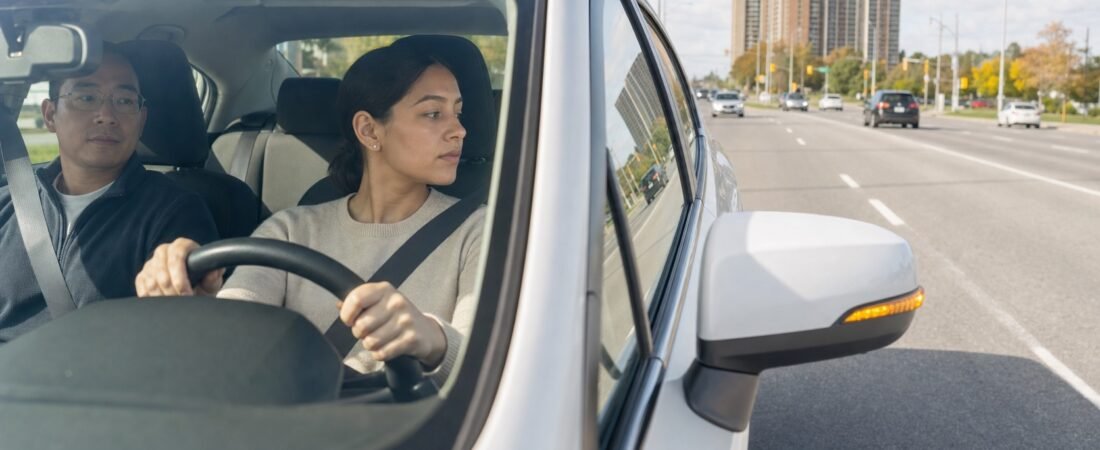
A practical lane-change guide for Ontario new drivers learning mirror checks, blind spots, timing and calm road-test habits.
Why Lane Changes Feel Hard For New Drivers
Lane changes feel stressful because several things happen at the same time. You need to hold your speed, read traffic behind you, watch the lane ahead, check the blind spot and still keep the car straight.
Many students rush because they think signalling means other drivers must let them in. In reality, your signal communicates your plan. You still need to make sure the space is safe before moving.
The Routine To Practise Every Time
- Check the mirror first so you know what traffic is doing behind you.
- Signal early enough that other road users can understand your plan.
- Look over your shoulder toward the lane you want to enter.
- Check again for speed, space and vehicles coming from two lanes over.
- Move gradually into the lane while keeping your speed steady.
- Cancel the signal and rebuild space in the new lane.
Mistakes That Cost Students On Road Tests
Common lane-change mistakes include signalling after the car already starts moving, staring too long in the mirror, drifting while checking the blind spot, slowing down suddenly or trying to change lanes near an intersection.
Another common mistake is forcing a lane change because the student feels committed. A good driver can cancel the plan. If the gap disappears, stay in your lane, breathe and try again later.
How To Practise Around Scarborough And The GTA
Start on calm multi-lane roads where traffic is light and speed is manageable. Practise one lane change at a time, then return to steady driving. Once the routine feels natural, add busier roads, parked vehicles, cyclists and left-turn lane decisions.
Your goal is not to squeeze into every gap. Your goal is to make each lane change predictable, smooth and legal enough that another driver does not need to brake hard because of you.
How should you practise lane changes?
Begin on a familiar multi-lane road in light traffic with an instructor or qualified accompanying driver. Practise one direction at a time, keep a steady speed, and treat cancelling an unsafe lane change as a correct decision rather than a mistake.
- Ask your instructor to watch whether your mirror check happens before the signal.
- Ask your instructor to watch whether your shoulder check is quick but complete.
- Ask your instructor to watch whether you keep speed steady during the move.
- After practice, write down one strength, one habit to repeat, and one mistake to fix before the next drive.
When is a lane change road-test ready?
You are getting close when you can choose a safe gap without being coached, keep the car centred during mirror and blind-spot checks, cancel a lane change calmly when needed, and move without making nearby drivers react suddenly.
Need help getting road-test ready?
SparkOn Driving Academy helps students in Scarborough and nearby GTA areas prepare with patient lessons, mock tests and road-test car support.