
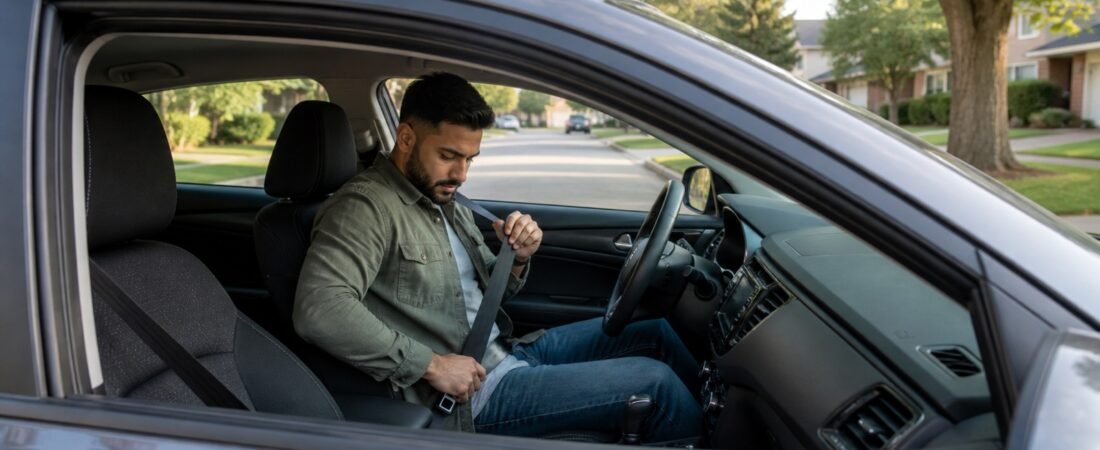
A seatbelt check is one of the simplest driving habits, but many new drivers rush it. Before you move in Scarborough traffic, every person in the vehicle should be properly seated, buckled and ready for the drive.
This guide is for Ontario G1, G2 and G drivers who want a practical pre-drive routine, not a legal lecture. It uses current official guidance from Ontario’s seatbelt safety page, the Official MTO Driver’s Handbook section on getting ready to drive, and Ontario’s page on choosing a child car seat. If you transport children, use the official child-seat instructions and your vehicle manual; this article is a driving-school checklist, not an installation inspection.
Ontario’s basic seatbelt rule
Ontario states that all motor vehicle drivers and passengers must wear a seatbelt that is properly adjusted and securely fastened. As the driver, you are responsible for wearing your own seatbelt, making sure every person has their own working seatbelt, ensuring passengers under 16 wear their seatbelts properly, and making sure children are secured in the appropriate child car seat or booster seat.
For a Scarborough learner driver, the important lesson is simple: do not start rolling while people are still adjusting belts, moving bags, changing seats or holding a child. Build the habit before you shift from park. It keeps the car calm and prevents last-second corrections when you should already be scanning the road.
Do the driver setup before the belt
The MTO tells drivers to sit properly behind the wheel, adjust the seat, check head-restraint position, keep a clear view and adjust mirrors. If you buckle first and then slide the seat or lean around to fix mirrors, the belt may sit badly across your body.
A better order is: seat, head restraint, mirrors, clear view, then seatbelt. Your shoulder belt should lie over the shoulder and across the chest, not under your arm or behind your back. The lap belt should sit low over the hips, not across the stomach. If the belt is twisted, fix it before moving. SparkOn’s driver seat and mirror setup guide explains the full pre-drive position routine.
Check passengers without turning it into an argument
New drivers often feel awkward telling friends or family to buckle up. Be direct and boring: “Everyone buckled?” Then wait. You do not need a speech. You need the car ready before you enter traffic.
This matters on short Scarborough drives too. A two-minute trip to a plaza, school, workplace or family member’s house is still a real trip. If a passenger removes the belt while you are driving, do not argue while moving. Keep control, find a safe legal place to stop, and solve the problem while the vehicle is stationary.
G1 and novice drivers need enough belts for everyone
The MTO Driver’s Handbook says Level One, or G1, drivers are only allowed to have the accompanying driver as a front-seat passenger and must have a seatbelt for that person. It also says novice drivers must have a seatbelt for every passenger. That means you should not treat extra passengers as “just squeezing in.” One seatbelt is for one person.
If you are still learning Ontario’s graduated licensing stages, review SparkOn’s G1 licence rules guide. For parents supervising a new driver, SparkOn’s parent guide for teen G1 practice is also useful because the supervising passenger sets the tone for calm, legal practice.
Children: slow down the routine
Ontario’s child-seat guidance uses a child’s developmental stage, weight and height to help determine whether a rear-facing seat, forward-facing seat, booster seat or seatbelt is appropriate. The official page also tells drivers to follow the child-seat manufacturer’s instructions and the vehicle owner’s manual.
Do not rush this part. If a child is crying, the harness is twisted, a bulky jacket changes the fit, or the seat seems loose, solve it before the vehicle moves. If you are unsure whether the restraint is appropriate, check Ontario’s official child car seat page and get qualified help. A driving lesson can improve your vehicle-control habits, but child-seat selection and installation should follow official instructions and certified guidance.
Loose objects can become distractions
The MTO also advises drivers to secure loose objects with cargo nets or straps, or move them to the trunk, so they do not injure passengers in a collision or sudden stop. This is easy to overlook during lessons and everyday errands.
Before driving away, move backpacks, water bottles, phones, food bags and sports gear out of the footwell. Nothing should be under the brake pedal area, rolling across the floor, blocking mirrors or sitting unsecured on the dashboard. If you are preparing for a road test or lesson, use SparkOn’s Ontario road test car checklist to build a more complete vehicle-readiness habit.
A Scarborough pre-drive seatbelt checklist
- Driver’s seat adjusted before the belt is fastened.
- Head restraint and mirrors set before moving.
- Driver’s shoulder belt across the chest, not behind the back or under the arm.
- Lap belt low across the hips, not twisted or sitting on the stomach.
- Every passenger has their own working seatbelt.
- Passengers under 16 are properly buckled before the vehicle moves.
- Children are in the appropriate restraint according to official guidance and manufacturer instructions.
- Loose items are secured or moved away from pedals and seats.
- No one is adjusting belts, bags or seating while the car is entering traffic.
Common mistakes new drivers make
The most common mistake is treating the seatbelt as the last rushed thing before driving away. That creates a messy start: the driver is buckling, checking mirrors, talking to passengers and watching traffic all at the same time. Another mistake is letting passengers decide the standard. The driver is the person responsible for whether the vehicle moves.
A third mistake is relying on warning chimes instead of a routine. Technology can remind you, but it does not replace judgment. You still need to notice if a belt is twisted, a passenger is sharing a belt, a child restraint is not ready, or loose objects are creating risk.
Build the habit during lessons, not after
The best time to make this automatic is during early practice. Start every Scarborough lesson the same way: seat, mirrors, belt, passenger check, loose-object check, then observation before moving. The routine should be calm enough that you can do it in a driveway, parking lot, residential street or busy plaza without feeling rushed.
If your first five minutes of driving feel disorganized, book a focused lesson with SparkOn Driving Academy in Scarborough. We can help you build a clean pre-drive routine, smoother starts, better observation and safer passenger-management habits before you move into heavier traffic.