
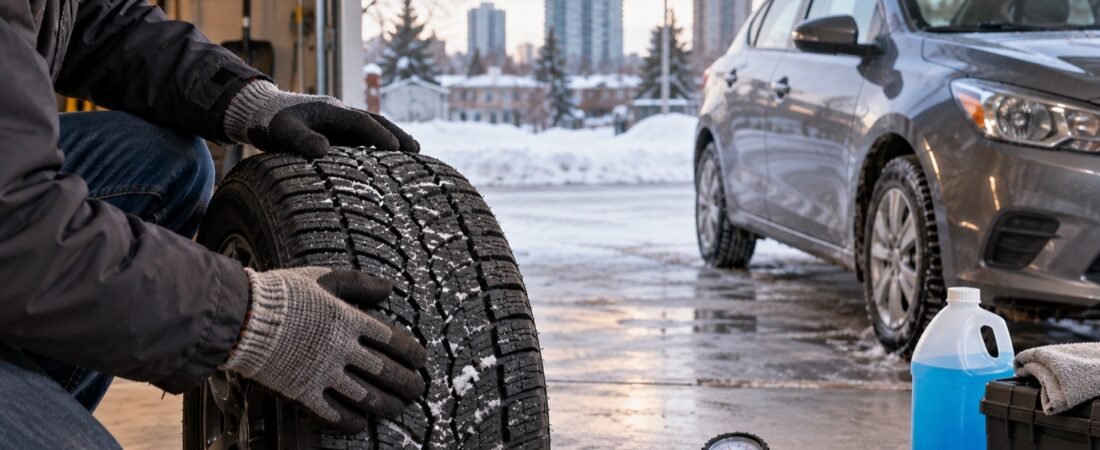
Winter preparation is more than buying a pair of tires when the first forecast mentions snow. For a new driver in Scarborough, the useful work starts earlier: check the tires, learn what the numbers mean, refill washer fluid, and understand how the car will behave when the road loses grip.
This is a vehicle-readiness guide, not a promise that any one tire will make winter driving easy. Tires cannot replace slower speeds, longer space or good decisions. They can, however, give you a better starting point for the first icy morning and for lessons that build confidence through the season.
Start with the MTO vehicle check
The Official MTO Driver’s Handbook maintenance guidance tells drivers to look for under-inflated tires, damage, and ice, snow or dirt that could interfere with lighting, steering or visibility. It also recommends checking tire pressure, condition and wear, and following the vehicle owner’s manual.
That is the official baseline. My instructor recommendation is to make the check a short, repeatable habit before winter lessons: walk around the car, look at each tire, then check the pressure when the tires are cold. If anything looks damaged or the pressure keeps dropping, have it inspected rather than guessing.
Read the tire sidewall, then use the owner’s manual
The numbers molded into a tire sidewall tell you its size and load information, but they are not automatically the correct inflation target for your car. Use the pressure listed on the vehicle’s door-jamb label or in the owner’s manual. The sidewall maximum is not a personal setting to copy without checking the vehicle information.
Cold weather lowers tire pressure, and a tire that already loses air can become a handling problem. Check all four tires and the spare if your vehicle has one. Do not rely on how a tire looks from across the parking lot; a tire can be low before the sidewall appears obviously soft.
Look for tread and damage
Inspect the tread for uneven wear, cracks, bulges, nails or objects stuck in the rubber. Uneven wear can point to alignment or suspension issues that deserve a mechanic’s attention. If you are unsure whether the tread is safe for the season, ask a qualified tire professional to measure it and explain the result.
Do not invent a “penny test” result or treat one quick measurement as a complete inspection. The MTO handbook recommends checking tire condition and wear; a professional can also identify age, sidewall damage and problems hidden on the inside edge.
Understand winter-tire choices without overpromising
Winter tires are designed for cold-weather conditions, but the right choice depends on your vehicle, driving pattern and the manufacturer’s specifications. Ask a reputable tire shop about the correct size, load rating and wheel fitment. If you change tires seasonally, label their positions and have the wheel fasteners torqued according to the vehicle maker’s instructions.
All-season tires do not mean every season feels the same. A tire that is acceptable in mild rain may not give the same grip on a cold, polished intersection. Whatever tires you use, leave more room and avoid sudden braking, steering or acceleration when the road is slippery. Those are the MTO’s practical winter habits, not a claim that equipment alone prevents a skid.
Refill winter washer fluid and test the controls
The MTO recommends carrying extra windshield washer fluid in winter and refilling the container when necessary. Use a winter-rated fluid appropriate for the temperatures you expect; do not dilute it with plain water. Test the washers and wipers while parked and replace blades that leave a film or streaks.
Keep a scraper and snow brush in the car, and store them where they are easy to reach. You should be able to operate the washer, wipers, heater and defroster without looking down for a long time. The MTO getting-ready guidance treats knowing these controls as part of being ready to drive.
Practise the first cold-weather changes
Your first winter lesson should not be a test of bravery. Start with a quiet Scarborough route and notice how the car responds to gentle inputs. Use a smooth accelerator, brake earlier than you would on dry pavement, and keep the steering movement gradual. The MTO bad-weather guidance advises slowing on snow and avoiding sudden steering, braking or acceleration that could cause a skid.
At a signalized intersection, look ahead for shiny patches, packed snow and slush near the stop line. On a residential hill, plan the approach before you need to brake. Around Scarborough plazas, expect tire tracks, snowbanks and pedestrians wearing hoods who may see less of you. The practical lesson is to create time and space before the surface surprises you.
Common learner mistakes I would correct
- Waiting for the first snow: A tire or wiper problem is easier to fix before the weather turns.
- Inflating by appearance: Use a gauge and the vehicle’s recommended pressure, not your eyes.
- Clearing only the windshield: Mirrors, roof, lights and side glass matter too. See SparkOn’s full frost-and-snow visibility guide.
- Braking late because the limit is unchanged: A posted speed limit does not guarantee dry or ideal conditions.
- Testing grip with a hard stop: Do not create a skid to “see what happens.” Build feel with gentle inputs in a safe, supervised setting.
Pack a simple winter driving kit
The MTO handbook suggests winter emergency supplies such as warm clothing, food, a flashlight, shovel and blanket. You may also want gloves, a phone charger, washer fluid and a small mat for kneeling beside the car. Keep the kit secured so it cannot become a loose object in the passenger area.
A kit does not make it safe to continue through a severe storm. Check the forecast and road conditions before leaving. If visibility becomes near zero or the road is not reasonable for your experience, delay the trip or pull completely off the road in a safe place.
A 15-minute pre-season checklist
- Read the door-jamb label and record the recommended cold tire pressure.
- Check all tires for pressure, tread wear, cracks, bulges and objects.
- Book a professional inspection if pressure is repeatedly low or wear is uneven.
- Confirm the tire size and rating before purchasing winter replacements.
- Refill winter washer fluid and test the wipers, washers, heater and defroster.
- Put the scraper, brush and winter kit in a secure, accessible place.
- Plan a quiet first practice drive before adding busier Scarborough roads.
Build winter confidence one decision at a time
Equipment checks are useful because they remove avoidable surprises. They do not replace observation, space and patience. If you are a G1, G2 or full-G driver who feels tense on cold mornings, book a Scarborough lesson with SparkOn Driving Academy. We can review your controls, practise smooth starts and stops, and build from quiet streets to busier routes when your decisions are ready. For scheduling, contact SparkOn.
Quick winter-readiness checklist
- Correct cold tire pressure checked?
- Tread and sidewalls free of damage?
- Winter washer fluid and working wipers?
- Windows, mirrors, roof and lights cleared before moving?
- Extra following space and a slower plan for slippery roads?
- Trip delayed if conditions exceed your visibility or experience?
A prepared car gives you a better chance to make calm choices. In Scarborough winter traffic, that usually means looking farther ahead, changing speed gradually and leaving yourself an option before the surface changes.