
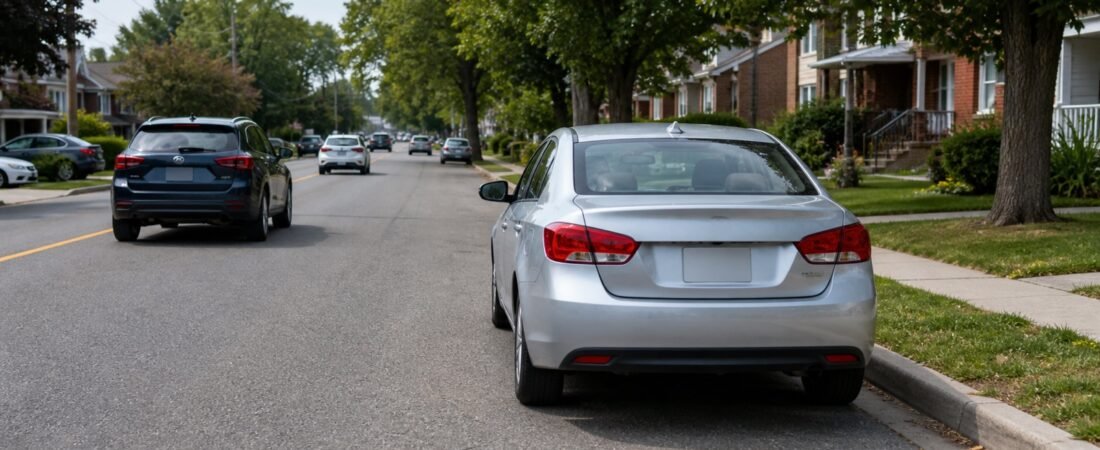
Pulling over looks simple from the passenger seat. For a new driver, it can feel busy: parked cars, cyclists, buses, driveways, people crossing between vehicles, and traffic behind you that does not always slow down early. In Scarborough, you may practise this on quiet residential streets, near plaza entrances, or along wider roads where the curb lane changes quickly from calm to crowded.
The goal is not to make the stop look fancy. The goal is to make it controlled, legal, predictable, and safe before you move back into traffic. Here is the routine I want learners to understand before they rush this skill.
Official rules first: signal, check, and move only when safe
The Official MTO Driver’s Handbook section on parking along roadways says that before moving from a parked position, drivers should signal, check for traffic, and pull out only when it is safe. That is the official rule side of the habit: other road users need to know what you plan to do, and you must not move just because your signal is on.
The MTO also reminds drivers in its Driving along guidance to keep checking ahead, behind, side to side, mirrors, and blind spots. For pulling over and re-entering, that matters because the hazard can come from almost anywhere: a cyclist beside you, a car pulling away ahead, a pedestrian near the curb, or a driver closing fast from behind.
Instructor recommendation: treat the signal as communication, not permission. You still wait for a safe gap. If the gap is not there, keep waiting calmly.
Pick the stopping spot before you slow down
A common student mistake is braking first and deciding later. That makes the car behind react suddenly, and it gives you less time to check the curb area. Before you slow, choose the spot with your eyes. Look for a legal and sensible place where you are not blocking a driveway, crosswalk, intersection area, bus stop, fire route, or posted no-stopping/no-parking zone.
On Scarborough residential streets, also look for clues that the stop may be awkward: garbage bins near the curb, snow piles in winter, construction cones, school pickup activity, delivery vehicles, or parked cars sitting far from the curb. If the first spot is messy, pass it and choose a better one. New drivers often think they must stop exactly where they first decided. You do not. A safer spot ten seconds later is better than forcing a poor one.
If you need more work on noticing parked cars, driveways, and hidden movement, read SparkOn’s guide to residential street driving in Scarborough. It connects directly with this skill.
A clean pull-over routine
Use a simple order every time. First, check your rear-view mirror so you know what is behind you. Then check the right mirror and right blind spot before moving toward the curb. Signal early enough that the driver behind understands you are leaving the traffic flow. Ease off the gas, brake smoothly, and guide the vehicle toward the curb without a sharp late steer.
Keep the car parallel with the curb. Many learners stop with the front close to the curb but the rear still angled out. That creates a problem when you re-enter because the back of the vehicle is still partly exposed to traffic. If you are practising, stop, secure the vehicle as needed, breathe, and then assess whether your final position is straight and close enough for the situation.
Do not stare only at the curb. Your eyes still need to move. You are controlling space beside the vehicle while still tracking what is behind you. This is why mirror setup matters. If your mirrors are not adjusted well, the whole routine becomes harder. SparkOn’s seat and mirror setup guide is worth reviewing before practice.
Re-entering traffic: do not rush because someone is waiting
Re-entry is where many learners lose patience. They signal, see one car far back, and start moving before the shoulder check is finished. Slow down the decision. The MTO’s Changing positions guidance repeatedly connects signalling with checking that the way is clear before moving. That same thinking applies when you leave the curb.
Your routine should be: signal left, check the rear-view mirror, check the left mirror, shoulder check left, confirm the gap ahead, then move out smoothly. If a cyclist, e-scooter rider, bus, or fast vehicle appears in the blind spot, cancel the move and wait. Keep the wheels mostly straight until you are actually ready to move, so the car does not creep into the lane while you are still deciding.
Instructor recommendation: when the gap is safe, commit smoothly. Do not crawl halfway into the lane and then hesitate. Other drivers can work around a predictable driver. They struggle with a driver who starts, stops, and changes their mind in the middle of the lane.
Scarborough situations that make this skill harder
On quiet side streets, the biggest issue is usually hidden movement. Someone may step out between parked cars, a driveway vehicle may reverse, or a parked driver may open a door. Near plazas, the curb lane may include turning vehicles, ride-share pickups, and pedestrians crossing outside the main entrance. Near school areas, keep the decision even more conservative because children can be harder to predict.
On wider roads, the challenge is speed difference. Traffic may be moving faster than it feels from a stopped vehicle. A gap that looks comfortable while you are parked can disappear quickly once you start moving. Build speed progressively and check again as you enter the lane. If you are uncomfortable judging gaps, practise first on calmer streets before trying busier roads.
For broader observation habits around cyclists and vulnerable road users, review SparkOn’s article on driving near cyclists in Scarborough. The same mirror and blind-spot discipline protects you when leaving the curb.
Common mistakes I correct with learners
- Signalling after braking. Signal before the car behind has to guess why you are slowing.
- Checking only the mirror. A mirror check is not the same as a shoulder check. Blind spots still matter.
- Stopping too far from the curb. This leaves the vehicle exposed and makes the restart awkward.
- Pulling out too slowly. Once the gap is safe, accelerate smoothly enough to join traffic without surprising others.
- Letting pressure control the decision. A honk behind you does not create a safe gap. Make the decision based on space, not noise.
- Forgetting the front of the car. While checking behind, still watch for pedestrians, parked vehicles, and traffic ahead.
Practice checklist for a curbside stop and restart
Use this checklist during lessons or supervised practice:
- Choose a legal, clear stopping spot before slowing.
- Rear-view mirror, right mirror, right blind spot.
- Signal right and brake smoothly.
- Move toward the curb with a gentle steering input.
- Stop parallel and avoid blocking driveways, crossings, or posted restricted areas.
- Before moving again: signal left, mirror checks, shoulder check, and confirm a safe gap.
- Re-enter smoothly, cancel the signal, and rebuild normal lane position.
If you are preparing for a road test, practise the routine as a safety habit, not as a memorized performance. SparkOn also has a G2 road test checklist for Scarborough learners that can help you organize your practice without guessing what will happen on test day.
Book a Scarborough driving lesson with SparkOn
If pulling over feels stressful, the fix is usually better timing, better mirror habits, and calmer gap judgment. SparkOn Driving Academy can help you practise this on real Scarborough streets at a pace that makes sense for your level. Book Scarborough driving lessons or contact SparkOn to work on curbside stops, re-entering traffic, residential driving, lane changes, and road-test preparation with an instructor.