
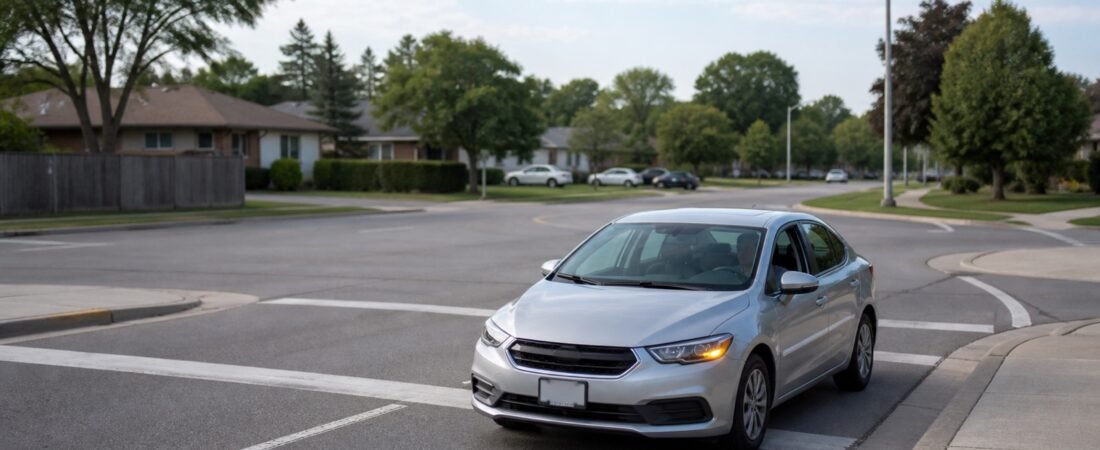
Turn signals are one of the simplest controls in the car, but many new drivers use them too late, too briefly or as if they create the right-of-way. In busy Scarborough driving, that can confuse everyone around you: drivers behind you, cyclists near the curb, pedestrians waiting to cross, and vehicles turning out of plazas or side streets.
The habit is straightforward: signal early enough to be understood, check that the move is safe, then move smoothly. The Official MTO Driver’s Handbook explains that signals tell other drivers what you want to do, including turning, stopping, slowing, changing lanes, leaving the road or moving out from a parked position. Just as important, the handbook also says signalling is not enough by itself. You still have to make sure the way is clear before you act.
Signals Are Communication, Not Permission
A turn signal does not tell other road users to make room for you. It tells them what you intend to do. That difference matters for G1 and G2 drivers because a signal can be correct and the move can still be unsafe.
For example, if you signal left for a lane change on a busy Scarborough arterial, the car already in that lane does not have to brake hard to let you in. If you signal right to turn into a plaza, cyclists and pedestrians near the curb still need to be checked and yielded to. If you signal as you pull away from the curb, you still need a clear gap before moving into traffic.
Think of the signal as step one in a conversation. It gives notice. Your mirrors, shoulder check, speed control and patience decide whether the action should actually happen.
When Ontario Drivers Should Signal
The MTO says to use turn signals and brake lights before stopping, slowing down, turning, changing lanes, leaving the road or moving out from a parked position. That covers more situations than many learners expect.
In Scarborough lessons, those moments often include turning at residential streets, moving into a left-turn lane, changing lanes before a major intersection, pulling away from a curb after pickup, entering or leaving a parking lot, turning into a driveway, and returning to your lane after passing a stopped vehicle. The common thread is simple: if your vehicle’s path or speed will affect someone else, signal early enough for them to understand.
Do not save the signal for the same moment you turn the wheel. A late signal is almost the same as no signal because other road users have no time to respond.
Signal Early, But Not Misleadingly
The MTO changing-directions section repeatedly uses the phrase “signal well before” for turns. The practical meaning is that your signal should appear before the actual movement, not after you are already drifting, braking hard or crossing the lane line.
But early does not mean unclear. If there are several driveways, side streets or plaza entrances close together, turning your signal on too soon can make another driver think you are taking the first opening. In that situation, wait until your intention is clear, then signal before reducing speed or moving into position.
On Scarborough roads with many entrances close together, say the plan out loud during practice: “not this driveway, the next street; mirror, signal, slow.” That keeps your timing deliberate instead of automatic.
Use the Mirror, Signal, Shoulder-Check Habit
For lane changes, the MTO changing-positions section says not to change lanes without giving the proper signal and looking to make sure the move can be made safely. It also gives a sequence: check mirrors for space, check the blind spot in the direction of the lane change, signal, check again, then steer gradually.
In real driving, learners sometimes rush the signal because they are worried traffic will close the gap. Do not treat the signal as a panic button. Use it as part of a calm routine:
- Check mirrors to understand traffic behind and beside you.
- Signal your intention clearly.
- Shoulder check before your vehicle moves sideways.
- Move only if the space is still safe.
- Cancel the signal once the move is complete.
For a fuller lane-change routine, review SparkOn’s mirror, signal and shoulder-check guide.
Do Not Forget to Cancel the Signal
Most turn signals cancel automatically after a regular turn, but not every movement is a regular turn. Lane changes, small steering movements, curved roads, roundabout exits, parking-lot movements and some shallow turns may leave the signal blinking after your intention is finished.
A signal left on can mislead the driver behind you or invite a pedestrian, cyclist or side-street driver to expect a move you are not making. After every turn or lane change, build the quick habit: wheel straight, signal off, mirrors forward again.
This matters in parking lots too. A signal left blinking while you are searching for a space may make another driver think you are about to turn or park immediately. In a busy plaza lot, clear communication helps prevent hesitation and sudden stops.
Right Turns Need More Than a Right Signal
A right signal tells people you intend to turn, but it does not replace the checks. Before a right turn, the MTO says drivers should look ahead, left, right and left again, and check the right rear blind spot if smaller vehicles or pedestrians have not been seen.
That is especially important on Scarborough streets with bus stops, bike traffic, driveways and pedestrians near curb ramps. Signal early, move close to the right when it is safe and legal, reduce speed smoothly, then check the area beside the car before turning. SparkOn’s right-turn-on-red guide covers the complete-stop and yield habit for red lights.
Left Turns and Left-Turn Lanes
For left turns, signal before moving into the correct lane or left-turn lane when the way is clear. The MTO also warns drivers waiting to turn left not to turn the steering wheel left until the turn can be completed, because a rear impact could push the vehicle into oncoming traffic.
Your signal helps other drivers understand why you are slowing or waiting, but your lane position and wheel position matter too. If the gap is not there, keep the signal on, keep the wheels straight and wait. SparkOn’s unprotected-left-turn guide explains that waiting habit in more detail.
Moving From a Parked Position
Signalling from a parked position is easy to forget because the vehicle is not moving yet. The MTO specifically includes moving out from a parked position as a time to signal. Before leaving the curb, check mirrors, signal toward the lane, shoulder check for vehicles and cyclists, then move only when there is enough space.
This is a useful Scarborough practice habit on residential streets with parked cars, delivery vehicles and driveway activity. It also pairs well with SparkOn’s seat and mirror setup routine, because good mirror adjustment makes the first traffic check much easier.
Quick Scarborough Signal Checklist
- Signal before turns, lane changes, stopping, slowing, leaving the road or moving from parked.
- Signal early enough to be understood, but not so early that it points to the wrong driveway or street.
- Use mirrors and shoulder checks before the vehicle changes position.
- Remember that signalling does not give you the right-of-way.
- Cancel the signal after the move is complete.
- Use hand and arm signals only when turn signals or brake lights are not working.
- In parking lots, signal turns and parking intentions clearly but keep moving slowly.
- If another driver seems confused, wait and make the safer choice.
Practise Signals Until They Feel Automatic
Good signalling is not about flicking a lever. It is about timing, observation and honesty. Your signal should match the move you are actually ready to make, and your checks should confirm that the move is safe.
If you are preparing for G2, building G1 supervised practice habits, or polishing everyday defensive driving, SparkOn can help you practise signal timing on Scarborough residential streets, multi-lane roads and parking-lot entrances. Book Scarborough driving lessons with SparkOn Driving Academy and build a calmer mirror-signal-shoulder-check routine before test day and daily driving.