
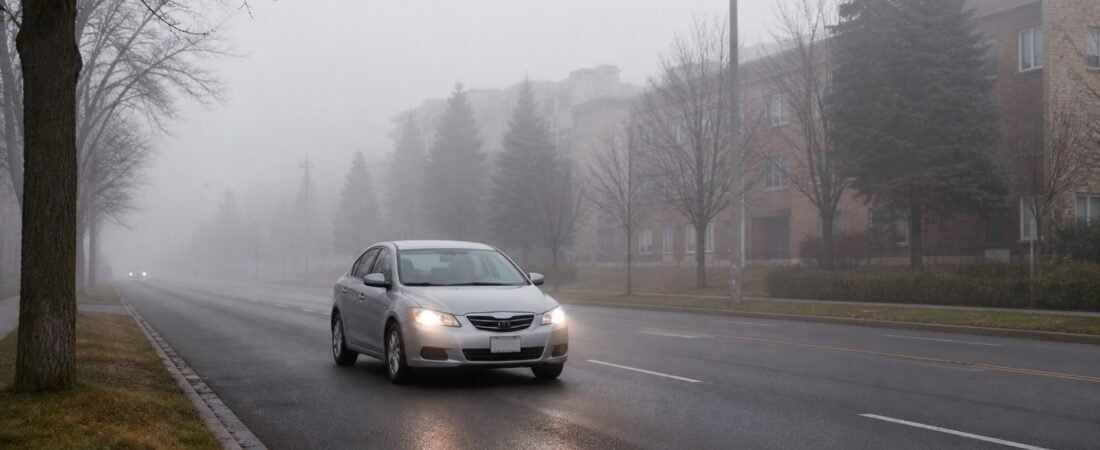
Fog can make a familiar Scarborough road feel unfamiliar in seconds. Clear-weather landmarks can suddenly hide brake lights, lane markings, pedestrians near bus stops, and vehicles turning out of plazas or side streets.
For new drivers, the goal is not to “push through” fog. The goal is to make your car visible, slow down early, create more space, and know when conditions are too poor to continue. The Official MTO Driver’s Handbook specifically warns that rain, snow and fog reduce how far you can see ahead, even with headlights. It also gives clear fog-driving guidance that Scarborough learners can practise before they need it for real.
Why Fog Is Different From Ordinary Night Driving
Fog is not just darkness. It is moisture suspended near the ground, so light reflects back toward you and distant objects lose contrast. That matters on Scarborough roads where learners may be watching for transit stops, parked vehicles, cyclists, turning vehicles, crosswalks, driveway traffic and changing signal timing all at once.
The MTO’s bad-weather guidance says the best choice is to avoid driving in fog when possible. Check conditions before leaving and delay the trip if there is a fog warning. If you are already driving and visibility is dropping quickly, the safer decision may be to leave the road completely and wait in a safe parking area until conditions improve.
Use Low Beams, Not High Beams
One of the most important fog habits is simple: use low-beam headlights. The MTO says high beams reflect off moisture droplets in fog, which can make it harder to see. Low beams aim light lower and reduce the wall-of-glare effect in front of the vehicle.
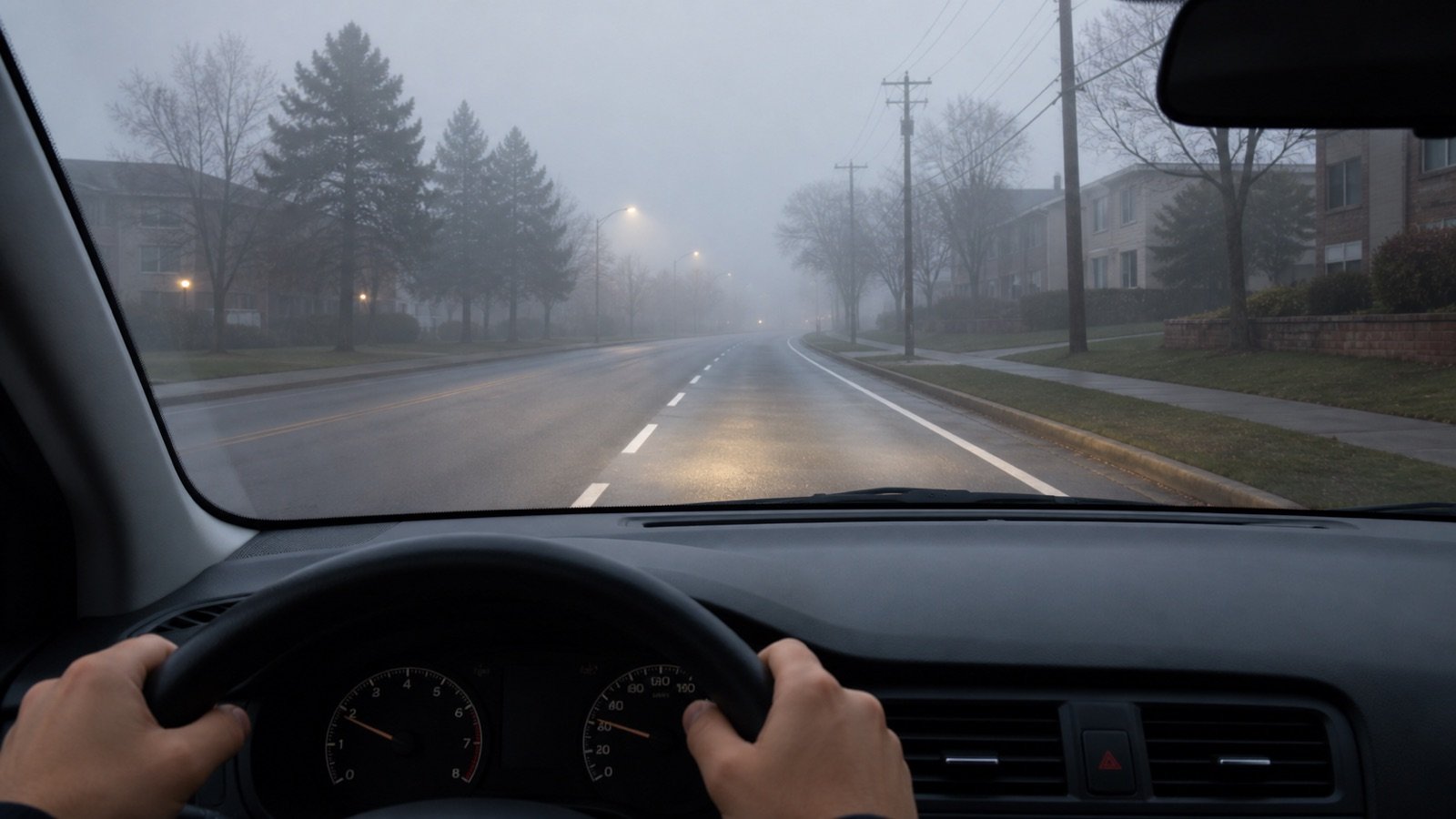
Make sure the full lighting system is on, not just daytime running lights. The MTO’s getting ready to drive section explains that daytime running lights are not a replacement for headlights in poor lighting conditions because they may not activate all required lights, including rear lights. If your car has an automatic setting, confirm it has actually turned on the full lighting system. In fog, “auto” is not something to assume blindly.
Slow Down Before You Feel Rushed
Fog shortens the distance between seeing a problem and reaching it. That means your normal clear-weather speed may leave you too little time to notice brake lights, a stopped vehicle, a pedestrian stepping out from behind a bus shelter, or a driver turning slowly across your path.
The MTO’s rule of thumb is to drive at a speed that suits the conditions and to slow down gradually. That word gradually matters. A sharp brake in fog can surprise the driver behind you. Ease off the accelerator early, check your mirrors, and reduce speed smoothly so your car remains predictable.
This is also why the posted speed limit is not the target in poor visibility. The MTO driving-along guidance reminds drivers to obey posted limits but always choose a speed that lets them stop safely, including below the limit in bad weather.
Open Up Your Following Distance
A two-second gap is only a minimum for ideal conditions. In fog, treat it as too tight. You need more time to see the vehicle ahead, recognize brake lights, decide, and stop smoothly.
If another vehicle is following you too closely, do not speed up to escape it. The MTO’s fog guidance specifically warns drivers not to speed up to get away from a close follower. Instead, keep your own actions calm and predictable. Hold a steady lane position, avoid sudden braking when possible, and look for a safe place to turn off or pull into a lot if visibility is becoming uncomfortable.
For a refresher on spacing, SparkOn’s following-distance guide explains how the two-second rule works and why extra space is needed when conditions are not ideal.
Use the Right Edge and Lane Markings Wisely
The MTO recommends using pavement markings to guide you in fog and using the right edge of the road rather than the centre line. That advice is especially useful for Scarborough learners on multi-lane roads where opposing headlights, wet pavement glare and faded lane markings can make the centre area visually busy.
Do not stare directly at one line or one set of lights. Keep scanning far ahead as much as visibility allows, then bring your eyes back to the lane immediately in front of you. Watch for the right curb, edge line, lane markings, signal heads, brake lights and sidewalk movement.
Avoid Passing, Lane Changes and Crossing Traffic
Fog is not the time to make extra moves. The MTO tells drivers to be patient and avoid passing, changing lanes and crossing traffic in fog. For a new driver, that means planning a simpler version of the drive.
If you know you will need a right turn soon, move into the correct lane early while you still have room and visibility. If you miss a turn, keep going until you can make a safe, ordinary correction. Do not make a rushed lane change because a navigation app says to turn now.
This connects closely with SparkOn’s lane-change routine. In fog, the same mirror-signal-shoulder-check habit matters, but the better defensive choice is often to delay the lane change until the space and visibility are clearly safe.
Keep Windows, Mirrors and Controls Ready
Fog outside often comes with moisture on the windshield, side windows and mirrors. Before leaving, clear every window and make sure you can find your headlights, wipers, washer fluid, defroster and fan controls without hunting for them while moving.
The MTO says drivers should know vehicle controls well enough to turn on wipers, headlights, high beams, heater and defroster without taking their eyes off the road. That is not just a road-test detail. In fog, a few seconds looking down at the dashboard can mean missing brake lights or a pedestrian at the edge of your vision.
If you are still building your pre-drive routine, review SparkOn’s seat and mirror setup guide before practising in low-visibility conditions.
When Visibility Is Too Poor, Leave the Road Completely
The MTO is clear on this point: do not stop on the travelled portion of the road. If fog becomes too dense to continue, pull completely off the road and try to position the vehicle in a safe parking area. Keep low-beam headlights on and use emergency flashers once you are safely off the road.
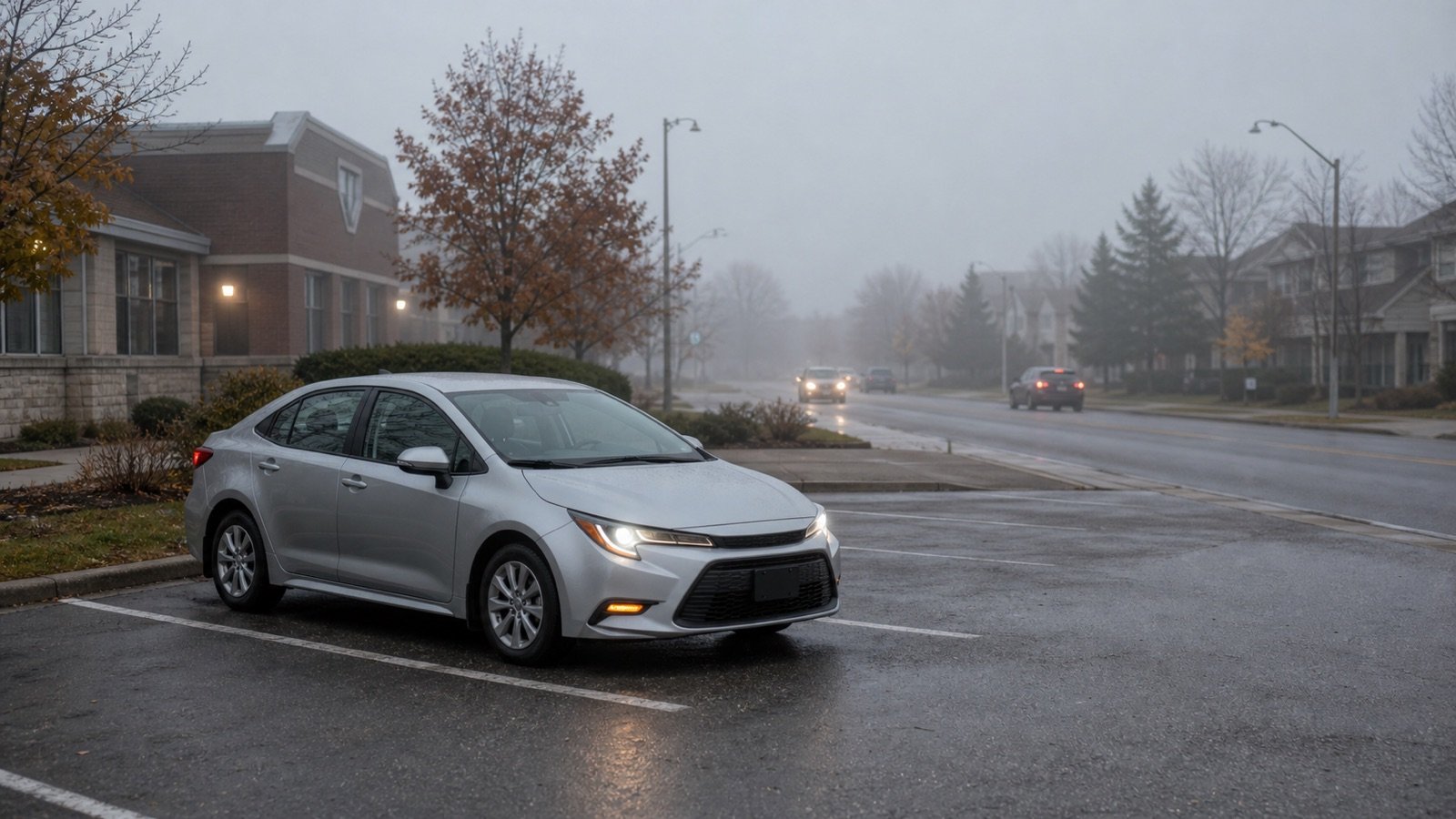
In Scarborough, that usually means looking for a plaza lot, side-street parking area, gas station, community-centre lot or another legal place where you are out of moving traffic. Do not stop in a live lane or anywhere another driver would have little time to react.
Scarborough Fog-Driving Checklist
- Check conditions before leaving and delay the trip if fog is heavy.
- Turn on the full lighting system, including low-beam headlights and rear lights.
- Use fog lights with low beams if your vehicle has them.
- Do not use high beams in fog.
- Slow down gradually before visibility feels urgent.
- Increase following distance well beyond the clear-weather minimum.
- Avoid passing, unnecessary lane changes and rushed turns across traffic.
- Use lane markings and the right edge of the road as visual guides.
- Keep windows, mirrors, wipers and defroster working for maximum visibility.
- If visibility becomes too poor, pull completely off the road into a safe parking area.
Practise Low-Visibility Decisions Before You Need Them
You do not need real fog to practise the habits. During a regular Scarborough lesson, you can rehearse the decision process: identify reduced visibility, turn on the correct lights, increase space, choose a lower speed, keep lane position steady, and decide where you would safely stop.
If you already read SparkOn’s night-driving guide or heavy-rain guide, fog is the same family of skill with one major difference: high beams usually make things worse, and patience matters more than progress.
Want to practise calm low-visibility decisions with an instructor beside you? Book Scarborough driving lessons with SparkOn Driving Academy. We can help you build safer habits for G1 supervised practice, G2 road-test preparation and everyday defensive driving around local streets, plazas and major roads.